Fall Color

Media
Image
Fall Color
Title
Fall Color
Body

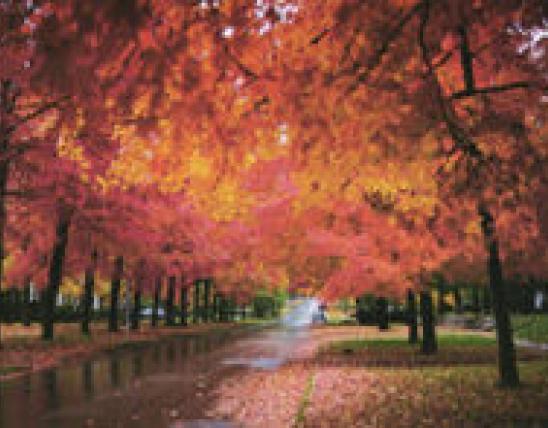
Missouri is home to a great variety of trees, shrubs, and woody vines. In autumn, their leaves turn color at different times, so Missourians enjoy a fall color season that may last six to eight weeks and progresses in phases. Sassafras, sumac, and Virginia creeper are some of the earliest to change, beginning in mid-September. By late September, black gum, bittersweet, and dogwood are turning.

Peak fall color in Missouri is usually around mid-October. This is when maples, ashes, hickories, and oaks are at the height of their fall display. By late October, the colors are usually fading, and the leaves are dropping from the trees. Fall color usually finishes by mid-November.

The progression of color change usually starts earliest in northern and western Missouri and moves southward and eastward across the state. Generally, the color change is predictable, but it can vary from year to year. Predicting the peak of fall color can be difficult. Much depends on the weather during fall and throughout the growing season.

MDC's Fall Color Reports usually begin in the second half of September (whenever colors start to appear) and wrap up around the middle of November, when most of the leaves have fallen or turned to brown. Reports appear weekly and are usually posted by Thursday evenings.

Where’s the Best Place?

You can enjoy Missouri’s fall color almost anywhere.

  • For spectacular vistas, choose routes along rivers with views of forested bluffs and along ridges with sweeping scenes of forested landscapes.
  • On a smaller scale, drive on back roads, hike, or take a float trip under a colorful forest canopy on a clear, blue-sky day. Visit MDC Conservation Areas and Missouri State Parks.
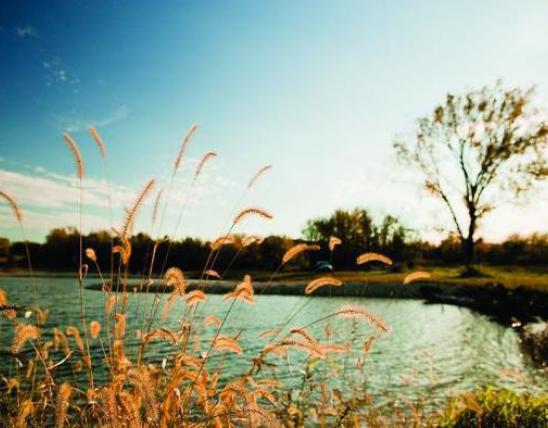
  • Even treeless areas, such as prairies and roadsides, display beautiful shades of gold, copper, purple, olive, and auburn with autumn wildflowers, shrubs, and curing, rustling grasses.
  • If you can’t get out of town, enjoy places with mature trees, such as older neighborhoods, parks, and even cemeteries.

Find events on your route

The Missouri Division of Tourism’s online calendar is packed with events happening all across Missouri. You’re sure to find fun things to do along your scenic fall color trips.

Title

Fall Color Video

Embed Code
Title
Related Content

Fall Color Reports

  • MDC regional map with Central Region highlighted
    Central Region, including Columbia, Jefferson City, and Lake of the Ozarks
    Status
    Beginning to turn

    Posted Oct. 23, 2026

    Some trees are ramping up to full color in the northern part of the Central Region. Cool mornings have sped up the recent changes. Boone County, for instance, has sugar maple, dogwood, and sassafras blossoming in orange; walnuts showing some yellow; cottonwood and sycamore reaching full yellow in places; and sumacs growing in fields turning red. 

    Further south, the maples are starting to turn red and orange, most elms have started to drop their leaves, and persimmons are starting to have yellow foliage. Across central Missouri, we are seeing hickories browning up, but the oaks are still green. Brushy species such as smooth sumac, Virginia creeper, and dogwoods are adding some nice color down low.

    Fall Color Hot Spots

    Clifty Creek Conservation Area in southern Maries County has a nice hiking trail with potential for nice color in the next week between the black gums and sugar maples. The oaks are still very green.

  • MDC regional map with Kansas City Region highlighted
    Kansas City Region
    Status
    Beginning to turn

    Posted Oct. 23, 2026

    Trees are still mostly green and yellow with sporadic fall color in the Kansas City Region. Right now you can see some brilliant reds in black gum trees and in Virginia creeper and poison ivy vines. Maples are slowly beginning to glow orange and red. Hickories and healthy honey locusts are breaking into bright yellow colors. White ash trees are starting their show of vibrant red, purple, and orange. You can expect the Kansas City Region to burst into color over the next week or two as we continue to experience cooler temperatures. Keep an eye on the oaks.

    Fall Color Hot Spots

    It is almost time to hike through Maple Woods Natural Area or drive around Forest Hill Calvary Cemetery to see fall color. But nature is at home, too. Walk around your neighborhood to enjoy the diversity of fall colors near you. The Visit Kansas City website gives additional fall color recommendations for the area.

  • MDC regional map with Northeast Region highlighted
    Northeast Region, including Kirksville and Hannibal
    Status
    In progress

    Posted Oct. 23, 2026

    Not much has changed since last week, but the temperatures are starting to fall. Hickories throughout the region have shut off and are a rusty brown instead of their typical mild yellow. Scarlets and purples are coming on strong and will be especially striking in white ash, sumac, black cherry, and dogwood. Yellows are coming out in green ash, hackberry, northern catalpa, and tulip trees (yellow poplar). Also look for orange and red in the maples and sassafras in town and scattered in the woods. In urban areas, expect ginkgo leaves to turn bright yellow over the next few weeks.

    Fall Color Hot Spots

    For scenic fall color drives in the region, consider taking U.S. Highway 61 north of LaGrange up to Wayland to look at the bluffs starting to change. State Highway 79 from Louisiana to Hannibal is also showing some nice colors.

    For hiking, horseback riding, and photography, consider visiting:

  • MDC regional map with Northwest Region highlighted
    Northwest Region, including St. Joseph and Chillicothe
    Status
    In progress

    Posted Oct. 23, 2026

    There is little variation to report this week in the Northwest Region, with temperatures temporarily climbing and much of our color provided by early turning species. In the woodlands, you may still notice bright yellow on shagbark hickory, hackberry, eastern redbud, red mulberry, and cottonwood. Many black walnuts have already dropped their leaves, and some species, such as ironwood, may be retaining dead foliage in the midstory.

    Many yard trees are at or near full color, with most maples almost entirely orange or red and sweet gum a golden yellow. American sycamores that have not dropped leaves show an amber or coppery brown. Any living green ash may have turned yellow or dropped foliage. The remaining greenery in the canopy is largely from oak species that have yet to change.

    Fall Color Hot Spots

    One of the best ways to view color is driving through some of the more wooded areas of our region. Namely, Highway 59 and Interstate 29 along the Missouri River are great vantage points for the loess hills. If you take these routes, look out over the hillsides and enjoy the mosaic of colors in the canopy. Bluffwoods and Poosey conservation areas offer scenic hiking trails of various difficulties. These areas and similar spots are great locations to optimize your outdoor experiences this fall.

  • MDC regional map with Ozark Region highlighted
    Ozark Region, including Rolla, West Plains, and Eminence
    Status
    In progress

    Posted Oct. 23, 2026

    There is a chill in the air, pumpkins are scattered around as decorations, jackets are out, and swim trunks are put away, but most importantly, fall color has arrived! The hills are painted in a familiar rusty-toned gradient, and that lovely feeling early autumn brings is upon us. Most of our tree species are changing, have changed, or are even on the downswing depending on soil quality and site conditions. If however, you’re still noticing quite a bit of green, that is most likely due to either one of our native shortleaf pines or one of the oak species. Pine, of course, remains green year-round, and the oak species are very slow to change. You will notice some tinges of fading or color change now, but they remain primarily green. Some oaks have already gone completely dormant and are brown and brittle; this is due to our very dry fall thus far.

    The hickory species, including black, mockernut, shagbark, and pignut, have turned a classic yellow with highlights of orange; they are a major component of the overall fall color effect. Black walnut, a close relative of hickories, is nearly defoliated or clinging to yellow and brown leaves. Tulip trees (yellow poplars) are also clinging to yellow leaves, but not quite as sparsely as walnuts. Red maples are showing their magnificent reds and should continue to do so.

    Additionally, you may notice many maples in varying shades of red planted in yards and along roads for their beautiful fall foliage. Missouri’s fine understory trees are putting on a colorful show. The state tree, the flowering dogwood, will be a cool red with bright red dotted highlights from its little fruits, which come about this time of year. Eastern redbud, most loved for its early purple spring flowers, can be a range of colors, most often yellow but with shades of orange and nearly red. Sassafras, which can be a smaller tree in the upland but a large one in the bottoms, will have a red hue. Black cherry species may show their cherry leaf color if site conditions are right.

    Along rivers, the easiest tree to spot from a distance due to its bright white bark, the American sycamore, is showing its yellow color mixed with crunchy brown leaves still clinging to the bough. If you notice a bright red bush-like tree on the side of the road or in a field, that is most likely the winged sumac. It’s an early changer and one that’s hard to miss. Another bright red tree that changes quickly is the black gum, which often has bright red leaves alongside still-green leaves. With so many tree species, it’s no wonder things can suddenly swing from summer greens to autumn shades. Once the oak species decide it’s time, we’ll be in peak color, which could be as early as next week.

    Fall Color Hot Spots

    With such a lovely variety of colors in place, consider visiting one of the Ozarks’ giant springs. Water from these springs wells up from underground rivers and appears deep blue because of dissolved limestone and dolomite. This rare natural pigment creates a variable palette of color that complements the fall mix. Springs to visit include Blue Spring west of Ellington on Highway 106; Big Spring south of Van Buren; Round Spring north of Eminence on Highway 19; and, of course, Alley Spring west of Eminence on Highway 106. On a clear day, the red, yellow, and orange fall color canopy will reflect on the deep blue springs and form a unique natural painting.
  • MDC regional map with Southeast Region highlighted
    Southeast Region, including Cape Girardeau, Farmington, and Poplar Bluff
    Status
    In progress

    Posted Oct. 23, 2026

    Fall is illuminating the diversity of tree species Missouri has to offer. Some species glisten with sunshine yellows, including tulip tree (yellow poplar), elm, ash, black cherry, hickory, and eastern redbud. Other species show eye-popping plums and magentas, including flowering dogwood, white ash, persimmon, and Virginia creeper. Fiery reds are hard to miss, including black gum, sassafras, scarlet oak, red maple, white oak, and sumacs. Oranges and copper on bald cypresses and sugar maples blend into the warm fall color spectrum. Sugar maples also add a mosaic of brilliance in all fall colors, as do sweet gum and serviceberry. Colorful views capture attention left and right, and fall color peak is around the corner. This week’s bright, sunny days and cooler nights will usher in the most awaited moments of the fall color season next week!

    Fall Color Hot Spots

    Travel to the most heavily forested landscapes in the Southeast Region, where the rolling hills and the St. Francois Mountains offer views to soak in the sunshine, take deep, refreshing breaths, and enjoy the calmness of autumn.

  • MDC regional map with Southwest Region highlighted
    Southwest Region, including Springfield, Branson, and Joplin
    Status
    In progress

    Posted Oct. 23, 2026

    Regular color changes have finally come to most of the Southwest Region. Red is showing in red maples, sassafras, flowering dogwood, and black gum. Yellow is showing in some hickory, river birch, and hackberry. Unfortunately, this year, all colors seem muted from their full potential.

    Fall Color Hot Spots

    Places to see color are stream bottoms, fence rows, and portions of conservation areas. In town, watch for the red color in red maples.

  • MDC regional map with St. Louis Region highlighted
    St. Louis Region
    Status
    Beginning to turn

    Posted Oct. 23, 2026

    Compared to last week, we are getting some last hints of summer before the cold comes to stay. The weather hasn't caused most trees to lose their leaves, and they’ve been slowly transitioning into fall foliage. Keep an eye out for the cooler days, which will help trees keep their color and reduce the likelihood of leaf drop due to moisture stress.

    While you wait patiently for oaks and hickories to show off their amazing fall color, watch for other trees that have started their fall color journey. Sumacs, sassafras, and lindens have brought some bright colors to the landscape. Black gums have started to turn a bright red, adding a burst of fall color. Sugar maple foliage has started the shift from orange to yellow and is a delight to spot on a road trip! In the woods, along with hickories and sugar maples shifting, Virginia creepers have been a deep red along the trunks of trees and shrubs.

    Fall Color Hot Spots

    A walk in our woodlands offers the sound of crunching leaves underfoot and the chirps of white-breasted nuthatches, tufted titmice, and Carolina chickadees.

    Some places for a nice hike include: